On April 1, 2026, something quiet happened inside the Ford dealer portal that most of the auto industry missed. A new line item appeared in the Tier III co op claim dropdown. It read: inride – Trade Agent AI.
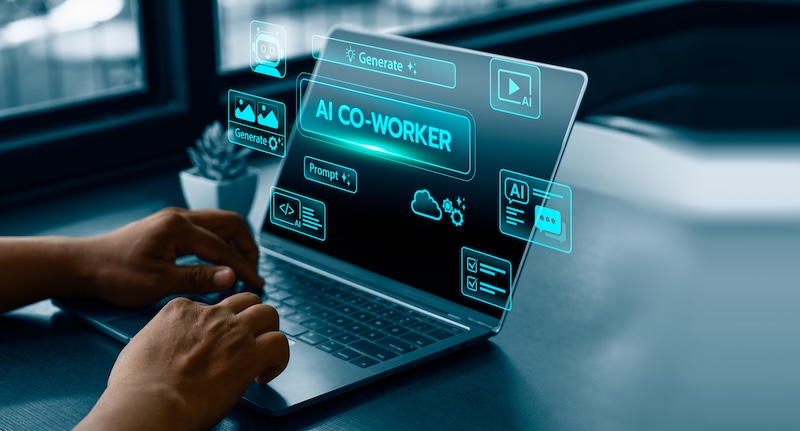
That is not a piece of software. That is a coworker.
For the first time, one of the Big Three has formally treated an autonomous AI agent the way it treats a billboard or a radio spot. As a recognized, reimbursable line item in a dealer’s marketing budget. The Ford co op program is older than the interstate highway system. It has approved newspaper, television, internet, and digital retail. It had never, until now, approved an agent. Not a tool. An agent.
I have run dealerships for thirty years. I have watched this industry argue about whether the internet was a fad and whether digital retailing would survive its awkward adolescence. I have sat on three OEM dealer councils. At every previous turning point, our industry was a few years late. We are not late this time. We are early. And the rest of the economy is about to follow.

The Doctor Who Called Me About His BDC
A few weeks ago, a friend of mine called me. He is a physician who owns multiple practices in the mid Atlantic. He had just hired a fully staffed Business Development Center. A room of human beings whose entire job is to answer the phone, schedule appointments, and stop the slow leak of patients who simply could not get through.
“Could inride do this for me? Because I just hired a BDC, and I do not want to hire a second one.”
He is a doctor. I sell Fords, Lincolns, and Mazdas. On the surface, we could not run more different businesses. But he and I have the exact same problem. We both sit on top of an enormous, valuable database of people who already trust us. We both lose those people every day to inattention. To a phone that rings four times and goes to voicemail. To a follow up text nobody had time to send. We both staff up to fix it. We both watch the cost climb every year. And the work itself, the ten thousand small acts of remembering, calling, and confirming, never gets cheaper, never gets faster, and never gets done well enough.
There is a name for this category of work. It is the work of remembering people. And until twenty four months ago, the only thing in the universe that could do it was another human being.
What Ford Actually Approved
When Ford approved Trade Agent AI as its own co op category, they did not approve a new piece of marketing technology. They approved a new theory of how dealerships are staffed. The co op program reimburses dealers for the things that produce sales. Putting an AI agent in that bucket is Ford saying, formally, with a SKU and an itemized invoice requirement, that an autonomous AI agent is a legitimate part of how a dealership produces sales in 2026.
That is the line we just crossed. Not a technology line. An organizational line.
For thirty years I have watched dealers chase the same math. Every customer in our database is worth, on average, $2,500 more in front end gross than a conquest customer. Outreach to our own customers gets ten times the response rate. We have always known this. And yet the work of methodically reaching every customer in a database of fifty thousand vehicles has been functionally impossible at scale. We never had enough humans. So we settled for spray and pray emails nobody opens and call lists nobody finishes. An agent does not get tired. It does not call in sick on the Friday before a holiday weekend. It does the work of remembering, at scale, twenty four hours a day. That is not a feature. That is a labor model.
The Industries Sitting on the Same Goldmine
Now consider, with my friend the doctor in mind, every other industry built on the same architecture. A trusted database of customers. A transactional moment that recurs on a predictable cadence. A workforce drowning in the administrative work of remembering people.
Healthcare practices, losing patients to no shows and phone tag. Veterinary clinics, where a missed heartworm reminder costs both a pet and a relationship. HVAC contractors, sitting on every furnace they have ever installed, with almost no ability to reach the homeowner before a competitor’s flyer does. Insurance agencies, where retention is the entire business. Real estate brokerages, where every past client is a future referral and almost nobody has the time to stay in touch. Financial advisors, dental groups, optometrists, fitness studios, equipment leasing companies, B2B distributors. Every one of them is sitting on a database of people who already said yes once.
My friend the doctor did not see his offices the way an AI engineer would have. He saw a BDC he had just hired, and he saw the BDC he was about to need next year. The math no longer worked. That is the moment every business owner in America is about to have, in their own industry, in their own conference room, in their own quiet panic about next year’s payroll.
The Honest Part
I am not going to pretend this is purely a story of progress. There are real people whose jobs are going to change. I employ hundreds of them. I think about it constantly. The honest answer is that the work of remembering people, at the scale we now need it done, was never going to be sustainably done by humans alone. We were always going to need help.
The question was only what shape the help would take. What I have seen at my own dealerships is that when an agent handles the cold, repetitive, twenty four hour a day work of database outreach, my human team gets to do what they are great at. Closing deals. Building relationships. Solving problems for customers who walk in already warm.
The agent does not replace the salesperson. It replaces the empty chair at the desk that nobody could afford to fill in the first place.
What April 1, 2026 Actually Was
When the history of this period gets written, I suspect April 1, 2026 will be one of those small, easily missed inflection points. Ford did nothing dramatic that day. They simply added a line item to a dropdown menu in a dealer portal. But that line item said something the rest of the economy has not yet said out loud. It said the work of an autonomous AI agent is real work, worth real money, deserving of the same reimbursement infrastructure historically reserved for human delivered media. It said the phrase “the workforce” now includes things that are not human.
Every other industry will have its own April 1. The doctor will have his. The HVAC contractor in Tulsa will have his. The insurance broker in Tampa will have hers. They will not call it that. They will just notice, one Tuesday morning, that the math finally worked.
I started in this business in the mid 1990s. The people who had the hardest time were not the ones who lacked talent. They were the ones who could not see that the rules had changed. The internet did not destroy the dealers who lost out. The dealers who lost out destroyed themselves by treating the internet like a marketing channel instead of a fundamental restructuring of how customers find cars.
Agentic AI is not a marketing channel. It is a fundamental restructuring of how a business remembers its customers. Treat it as a tool, and you will get incremental gains. Treat it as a coworker, the way Ford just did, and you will rebuild your business around capabilities you could never previously afford.
The dropdown menu has a new line in it. I would read that line very, very carefully.
Alex Perdikis is the Owner and CEO of Koons Motors (Ford, Lincoln, and Mazda dealerships in Silver Spring and Bethesda, Maryland) and the Founder of inride, the agentic AI platform behind Trade Agent AI. He has served on the Ford FDAF, Chevy LMG, and Mazda National Dealer Council, and has spent more than 25 years in retail automotive.